
Research
The face of the modern world is global anthropization, which affects the Earth’s resources and the stability of ecosystems. One of the consequences is the epidemiological threat resulting from the emergence and then rapid spread of previously unknown diseases. This applies to both animals and humans. It is estimated that about 70% of diseases affecting people are of zoonotic origin, they are the so-called zoonoses. The interspecies barrier is most often crossed by accident, in specific conditions of disturbance of the local ecological niche. Nevertheless, the consequences can be of epidemic proportions on a global scale.
The classic examples are coronaviruses: a family of viruses that colonize vertebrates, often without any symptoms. In the beginning of 21st century, there were two epidemics in the world as a result of breaking the human-coronavirus barrier: MERS and SARS. The ongoing SARS-CoV-2 pandemic, causing the COVID-19 disease, is the third and the first of a global range to spread so rapidly, colonizing virtually all communities in the world in a few months.
WHAT IS FAVORABLE TO ZOONOSES?
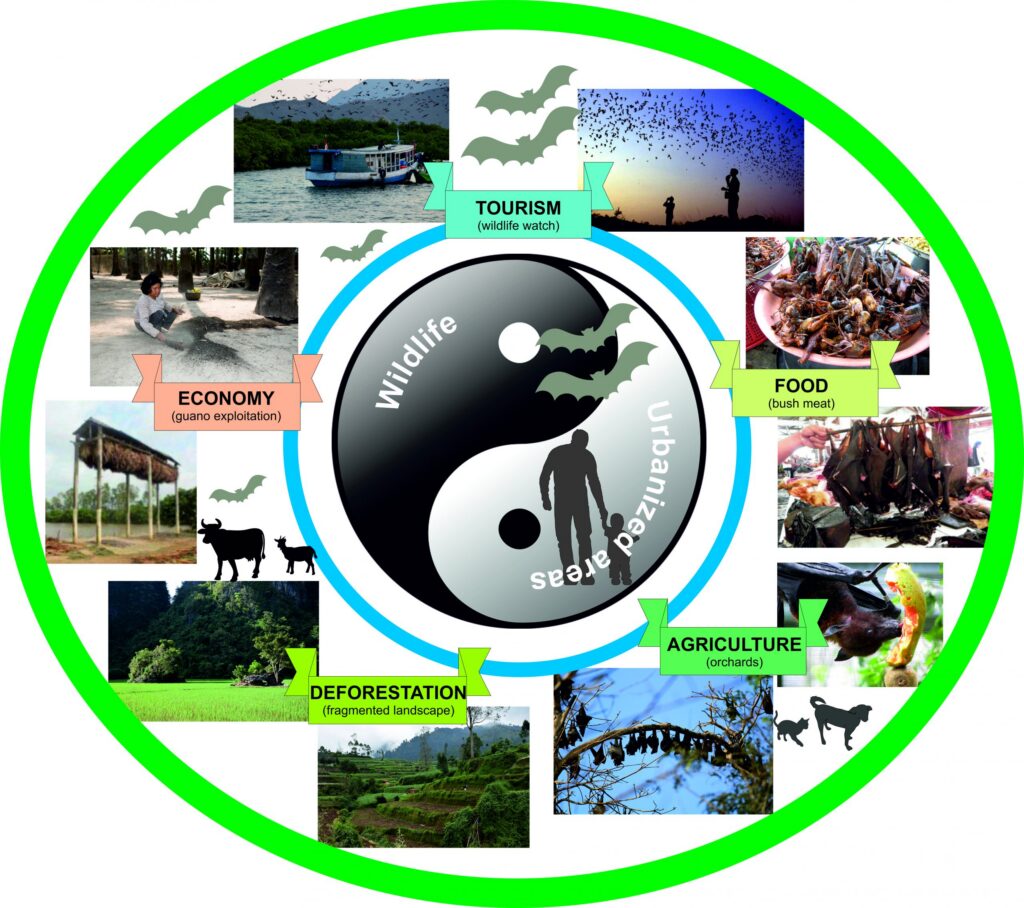
First of all, the violation or destruction of the natural ecosystem balance – the plundering of natural resources, demographic pressure and the exchange of goods, especially foods, between ecologically (epidemiologically) distant regions. Under the conditions of anthropogenic pressure, a specific “market” is created for the exchange of pathogens between individuals, species, geographical areas, which under natural conditions would have a limited chance to occur.
As a result, the circulation of pathogens is facilitated and close contact between wild animals and humans dramatically increases the risk of breaking through the inter-species barrier. With the movement of people and the transport of goods and food, the pathogen spreads from the original ecological niche (sylvatic phase) and the growth of the epidemic occurs, probably this is what happened in Wuhan (amplification phase), the first region in the world where a new disease has been found.
HUMAN – TRANSMITTER OF PATHOGENS
Under conditions of intensive economic development, dynamic population growth and global exchange of goods, the circulation of pathogens is accelerated. One of the factors that fosters the development of the epidemic is a drastic shortening of the transport time of goods and people who, as symptomatic and asymptomatic carriers, are nowadays identified as one of the best pathogen vectors (transmitters). This process is currently taking place with SARS-CoV-2.
IDENTIFICATION OF RISK AREAS
In Anthropocene conditions it is difficult to control often accidental breakdowns of the pathogen-human barrier. The development of analytical techniques to detect the presence of pathogens only identifies their existence in the environment, without the possibility of preventing transmission. The results of integrated, interdisciplinary research make it possible to identify so-called hot-spots – areas of increased epidemiological risk. The results of the research do not leave any illusions – The disruption of ecosystem balance favors the risk of transmission of pathogens.
WHAT NEXT STEPS ARE TO BE TAKEN WITH CORONAVIRUSES?
Without integrated, sustainable management of environmental resources and an epizootiological and epidemiological diagnosis, we will globally be struggling with successive mutations of coronaviruses, but also a whole range of other pathogens.
The promises of the OneHealth concept in the age of anthropocene [28.05.2020]
Graphics: Aneta Afelt, Christian Devaux